Dawoon Park
Dawoon Park (b. 1991, South Korea) is an artist and researcher whose work begins with sensory, emotional, and psychic experiences that resist immediate recognition or clear definition. Rather than dismissing them as irrational, insignificant, or merely private, she examines how such experiences are shaped by cultural conventions, social relations, and structures of power, and how they may offer other ways of perceiving and understanding the world. Moving across different materials, gestures, images, sounds, objects, and spatial situations, her practice makes these experiences perceptible without fixing them into a single interpretation. Her work is informed by her Korean cultural background and by an interest in how experience is carried, altered, and remembered through the body. She is currently a PhD candidate in the Binational Artistic PhD Program at the University of the Arts Bremen and the University of Groningen.
RESUME
Academic Qualification
PhD Candidate. Binational Artistic PhD Program. University of the Arts Bremen (HfK Bremen), Germany, and University of Groningen, the Netherlands. (2024–present)
Master of Arts. New Media. Visual Communication. Berlin University of the Arts (UdK). Germany. (2022)
Adaptation Study (Anpassungsstudium). New Media. Visual Communication. Berlin University of the Arts (UdK). Germany. (2021)
Bachelor of Fine Arts. Communication Design. Dankook University. South Korea. (2015)
Artistic & Academic Presentations (Recent)
Iconic Translation: Korean Sound Symbolism and Echoing Gesture. Research exposition under review at the Journal for Artistic Research. (2025–present)
Scores of Scores (Unfolding). Group Exhibition. Galerie der HBKsaar, Saarbrücken, Germany (2026)
Dialogue as Score: Activating A-phonie. Artistic Research Presentation. Joint Colloquium of the Binational Artistic PhD Program, University of the Arts Bremen, Germany. (2026)
LOOP Crit: Open Presentations and Critique Program. Selected Artist Presentation. Alternative Space LOOP, Seoul, South Korea (2025)
Absolute Approximation. Group Exhibition. 48 stunden neukölln festival, Magdalenenkirche Rixdorf, Berlin, Germany (2025)
Summersnowglobalism. Conference Publication. Proceedings of the ISEA 2025 – International Symposium on Electronic Art, Seoul, South Korea (2025)
Re Capitulating.queer. Art Residency and Open Studio. thealit Frauen.Kultur.Labor., Bremen, Germany (2024)
Scenes of Transformation and Resistance: Performing in Artistic Research. Performance and Talk. Binational Artistic PhD Program HfK Bremen in cooperation with Personal Structures, Palazzo Michiel (European Cultural Centre), Venice, Italy (2024)
Encounters in Artistic Research: Making, Thinking, Writing. Presentaion. The Research Centre Art & Society (Hanze) and the Research Centre Arts in Society (University of Groningen), Minerva Art Academy, Groningen, Netherlands (2024)
Nearly All Types of Honey Crystallize. Group Exhibition. Gesellschaft für Aktuelle Kunst, Bremen, Germany (2024)
Academic & Professional Experience
Coordinator. Binational Artistic PhD Program. University of the Arts Bremen, Germany. (2026–present)
Seminar Leader. Echoic Translation through Gestures Across Media. University of the Arts Bremen, Germany. (2025–2026)
PORTFOLIO
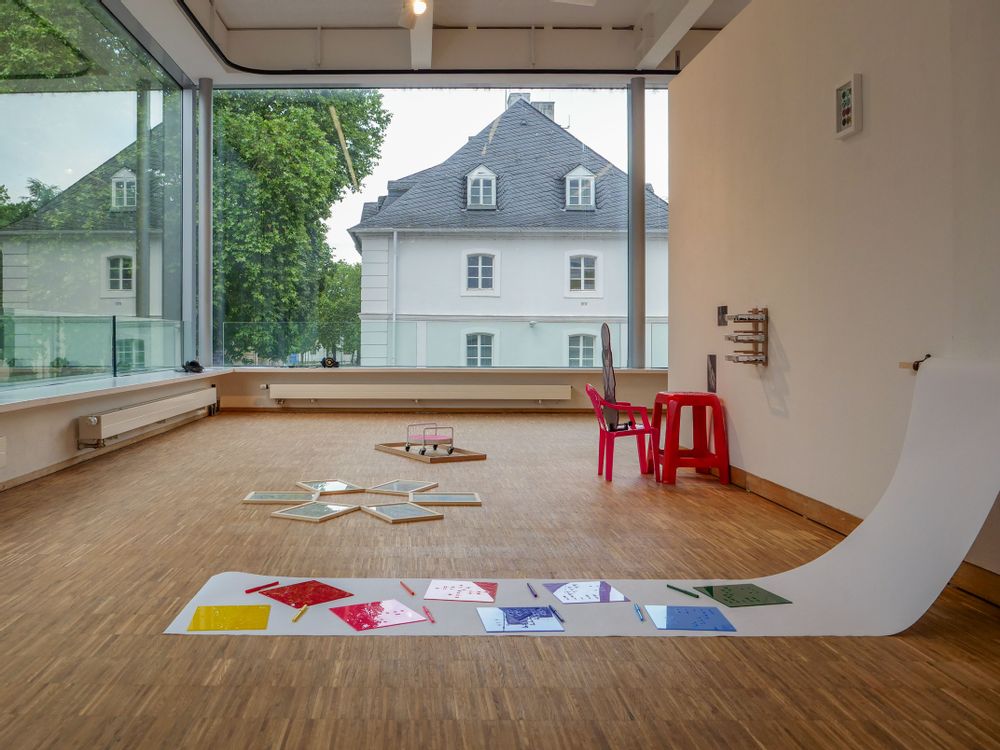
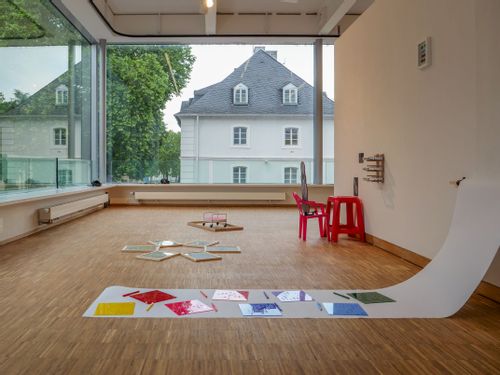
Aphonic Score is a series of works developed around Korean ideophones, Hangul letterforms, cosmetic materials, and an early relational scene. Across the installation, these elements appear in different combinations and scales.
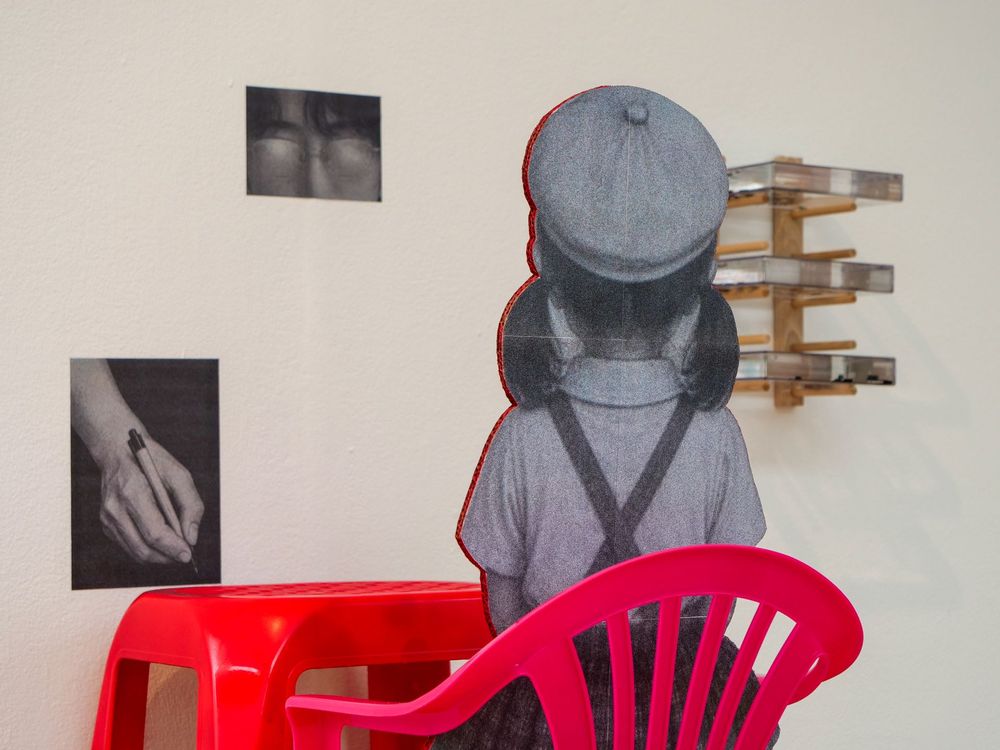
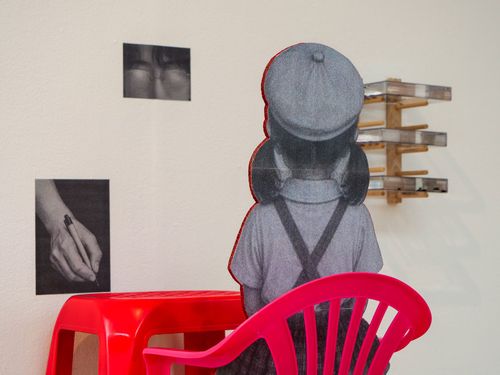
Two figures are staged in a scene of speaking and writing,
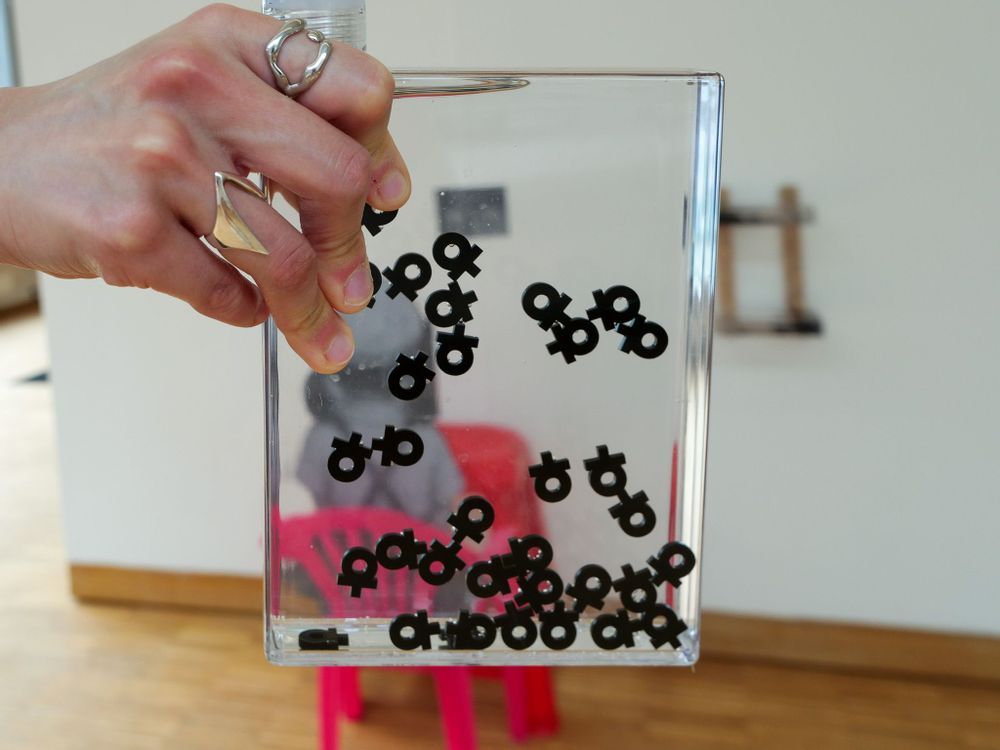
mediated by a series of water-filled bottles that each contain a floating Korean consonant and produce a distinct sound.
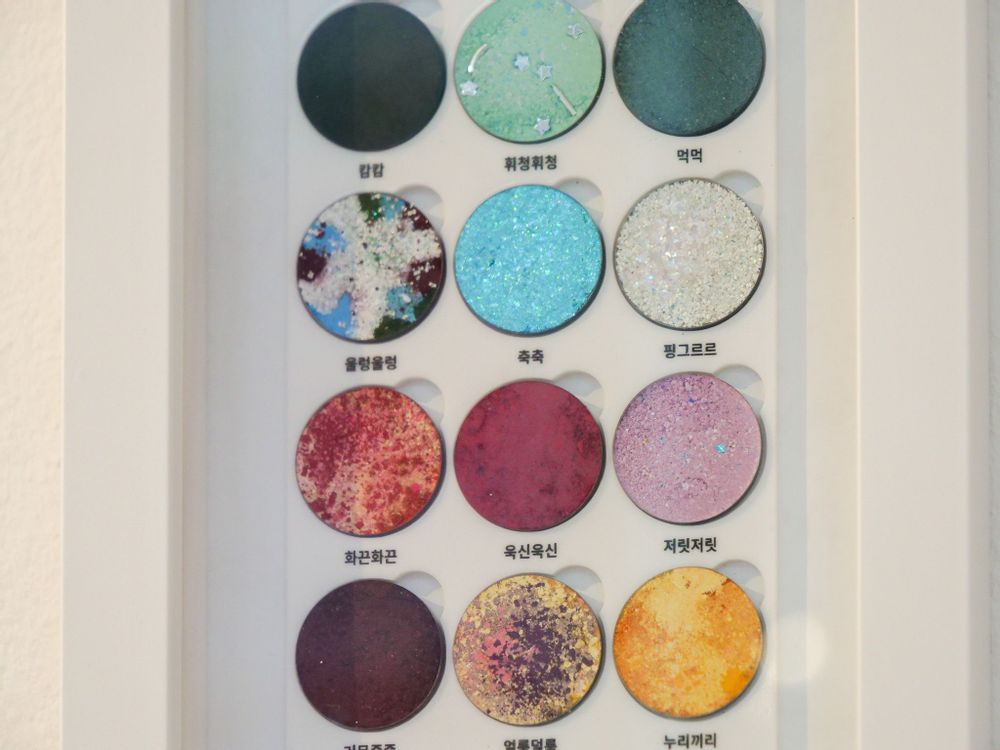
A framed arrangement brings together cosmetic palettes and Korean ideophones.
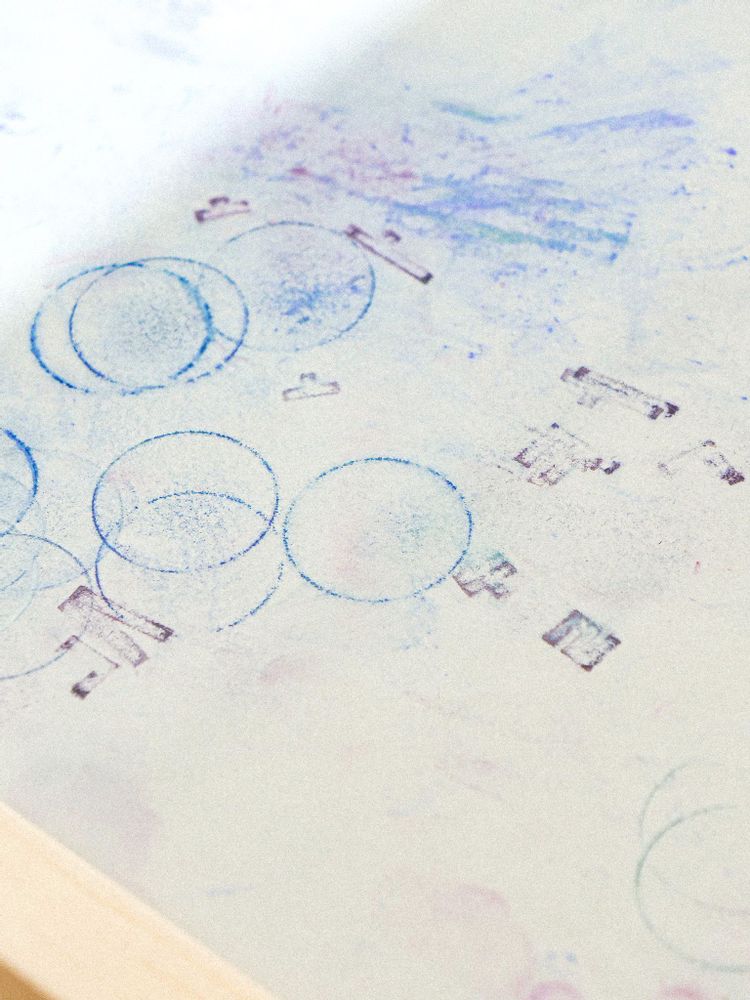
Marks produced during the pressing process become part of new words and compositions,
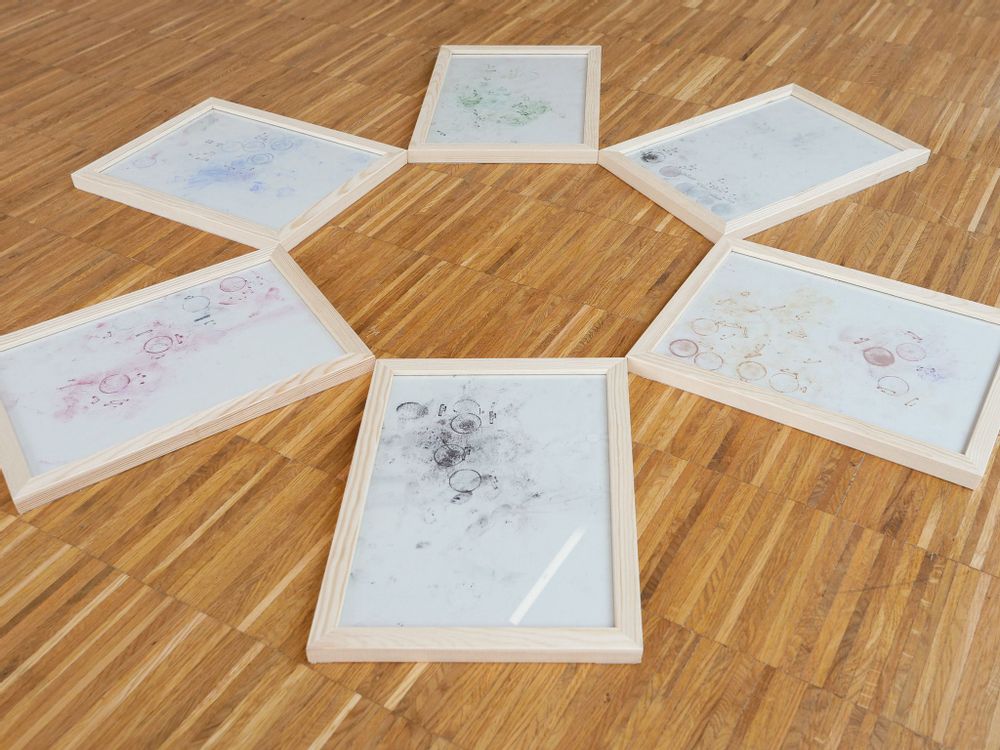
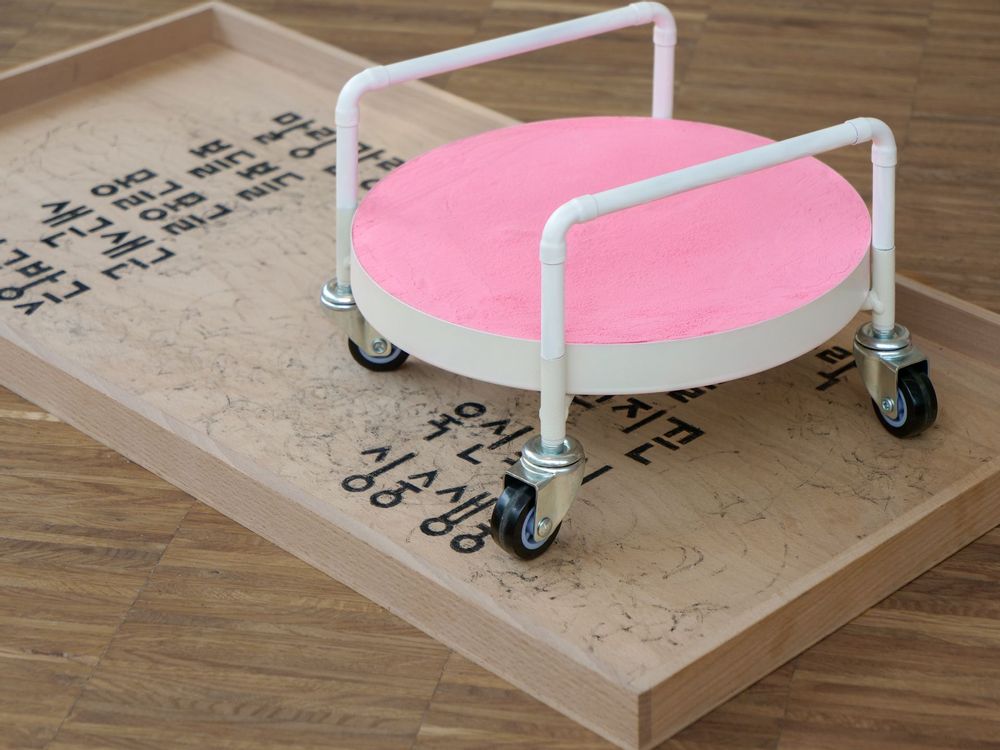
while a wheeled object containing pink pressed powder moves between two groups of ideophones, gradually leaving traces on the floor.
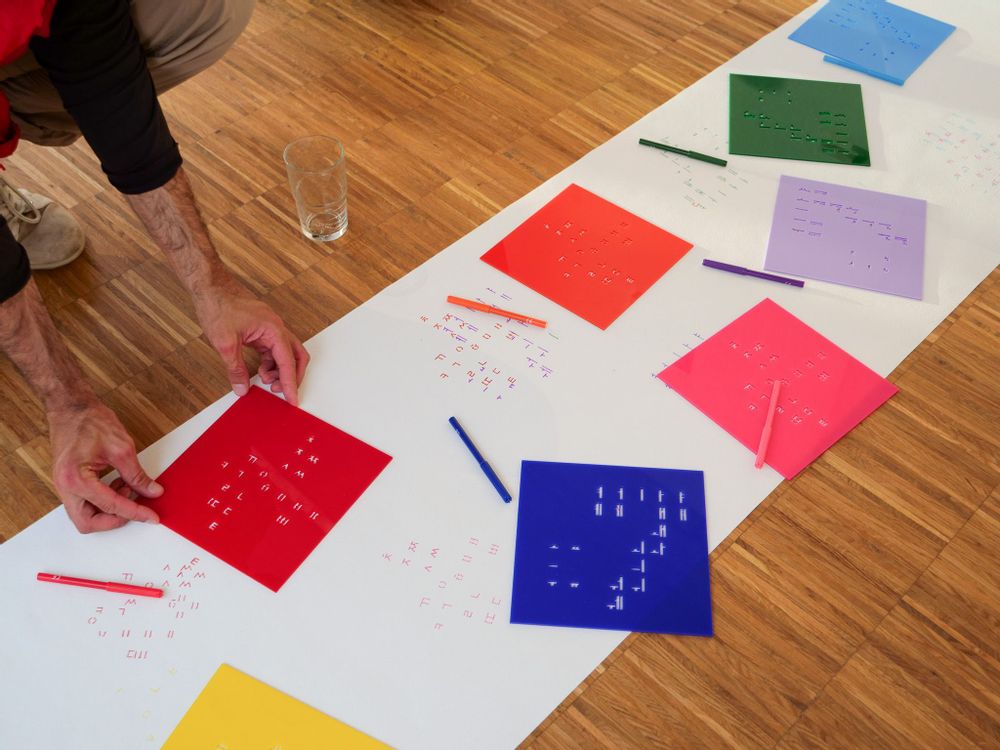
The works draw on the particular relationship between sound, form, and feeling found in Korean ideophones and Hangul letters.
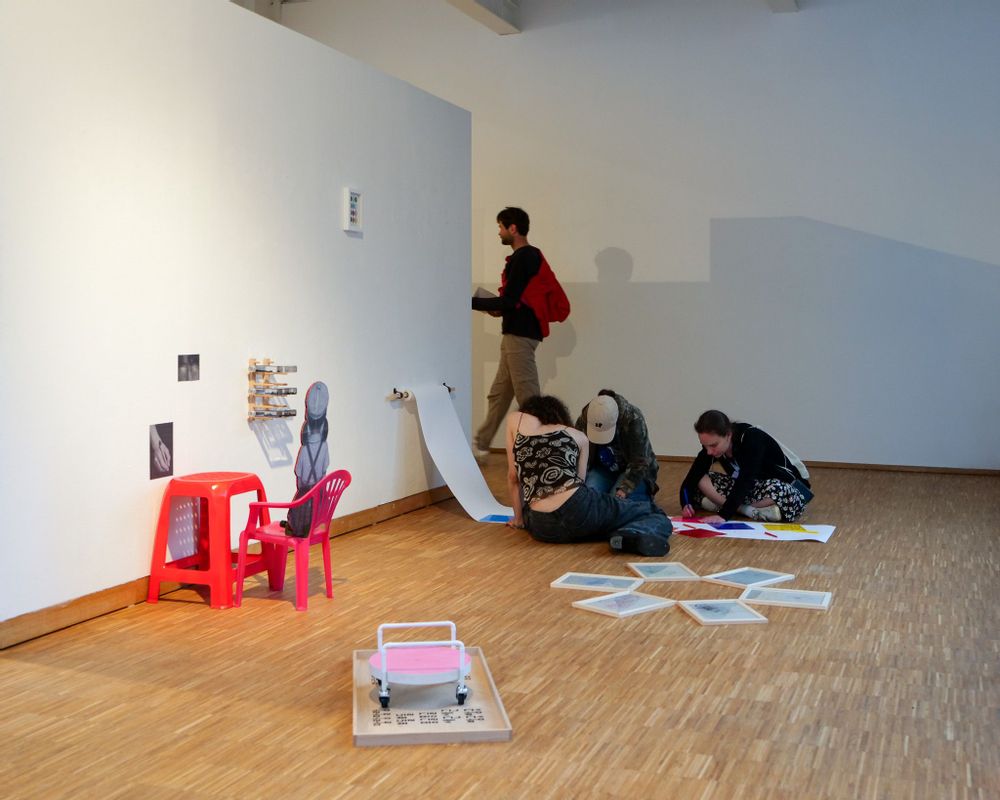
The installation brings together speaking, listening, writing, colour, and material traces, allowing these elements to move between linguistic, visual, and tactile forms. The project engages questions of aphonie, and feeling through installation, participation, and material experimentation.


The work began by asking how different people read the same image, and which visual qualities remain with them. Footage of light reflected on the Spree River and Benjamin West’s Narcissus and Echo were used as starting points for a series of experiments with voice and gesture. Each participant selected and reorganised what they perceived through their own bodily habits, memories, and associations. The resulting performances reveal not a shared reading of the images, but a range of personal structures of attention and interpretation.


The river footage, the painting, and the recorded performances were repeatedly combined and rearranged during the editing process. This allowed the work to examine how particular qualities—such as rhythm, repetition, distance, or tension—were noticed differently and transformed through each response. Across the two screens, the original images do not remain fixed sources. They become material for successive interpretations, raising the question of how an image changes when it is perceived, remembered, and re-formed through another body.
Two-channel audio-visual installation, 5’51”


Summersnowglobalism developed through experiments with rice, poplar seeds, fermentation, and glass containers. The installation asks how vision came to occupy a privileged position in the production of knowledge, particularly through scientific practices of observation, separation, and classification. In contrast, its materials invite forms of knowledge that emerge through handling, preparing, smelling, waiting, and noticing physical change.


The project began with a visual resemblance between poplar seeds drifting through the city—often described as “summer snow”—and grains of rice floating during the fermentation of dongdongju, a traditional Korean rice wine. The Korean ideophone dongdong (동동) describes this floating movement.
Experiments with rice, fibres, leaves, and liquids tested how this resemblance changes when it is encountered not only as an image, but through weight, texture, moisture, smell, and decay. The materials resist being understood through vision alone: they must be touched, prepared, and allowed to change.


The snow globe presents the world as a sealed scene that can be held, viewed, and controlled from the outside. In the installation, this familiar object becomes a model for the scientific gaze: the observer remains separate while the enclosed environment is reduced to something visible and measurable.
Placed among unstable and perishable materials, however, the miniature landscape no longer appears self-contained. It raises a question about what disappears when observation is detached from physical contact, participation, and care.


The adapted ceramic dispenser contains rice and a microbial mixture inspired by the preparation of dongdongju. Fermentation brings scientific observation into contact with cooking: one may examine changes in colour, density, temperature, and movement, but the process also belongs to the practical knowledge of making food, sustaining life, and working through smell, taste, touch, and time.
Rather than treating science and cooking as separate fields, the work explores the shifting boundary between them. Both involve close attention to material transformation, yet they organise the relationship between observer, body, and matter differently.
This research also became an early point of departure for my current doctoral work. Its attention to tactile forms of meaning—particularly the way dongdong conveys movement through the sound and texture of language—led to my continuing interest in words that seem to carry sensory qualities within their form.
Mixed-media installation with biological process, and tactile material, dimensions variable


Face Value takes as its starting point the portrait of Queen Elizabeth II, one of the most frequently reproduced faces on banknotes worldwide. A British £20 polymer banknote is enclosed between two acrylic sheets cut to the dimensions of the note and mounted on a custom-built structure extending from the wall.
The work considers the banknote portrait not only as a guarantee of monetary value and public trust, but also as an image through which sovereignty and political authority are made visible. The widespread circulation of the monarch’s portrait across Britain, Commonwealth countries, and former colonies points to the continuing presence of colonial history within systems of representation and exchange.


The transparent section of the polymer banknote functions as a small viewing window. Looking through it, the viewer encounters an interpolated video played by a Raspberry Pi. Produced through a machine-learning model using portraits collected from banknotes around the world alongside randomly selected faces, the video shows one face gradually transforming into another.
Seen through the monarch’s portrait, these shifting faces unsettle the apparent stability and authority associated with the image printed on money. The title Face Value refers both to the nominal value assigned to currency and to the act of accepting something according to its outward appearance. The work asks how value, trust, and authority become attached to a face, and how that face continues to circulate through monetary and colonial systems.
£20 polymer banknote sandwiched between two acrylic sheets, custom wall-mounted housing, Raspberry Pi, single-channel looped digital video
13.9 × 7.3 × 10 cm