Rita Macedo
Rita Macedo lives and works in Berlin. Her practice takes moving image as its point of departure, understanding film as a privileged site of both artistic and research-based production. In Macedo’s work, cinematic, textual, and spatial means are differentiated in order to make their everyday entanglements tangible and fundamentally rework the relations between them. Her practice is therefore concerned above all with questions of perception, the production of subjectivity and its limits, and the forms of death it takes. Macedo investigates the infrastructures through which subjectivities become livable and legible.
RESUME
Since 2024, Macedo has been a program curator for the European Media Art Festival (EMAF), and in 2026 she became a PhD Candidate in the Binational Artistic PhD Program at the Hochschule für Künste Bremen.
Her work has been shown internationally at film festivals and in exhibitions since 2010, most recently at IndieLisboa (Lisbon, 2025), the European Media Art Festival (Osnabrück, 2023), Kurzfilm Festival Hamburg (2024), Kunsthalle Osnabrück (2023), and Kasseler Kunstverein (2024). In 2023, she also received the Grand Prize of the German Competition at Kurzfilm Festival Hamburg.
A Collective / Inarticulate Harmony, an essay co-written with Kerstin Stakemeier on the film seminar Doc’s Kingdom, was published in the Summer 2026 issue of Radical Philosophy.
Rita Macedo is currently Interim Professor of the Foundation Class Film/Video at HBK Braunschweig.
PORTFOLIO
BLACK HOLE DESCENDING
**a preliminary study**
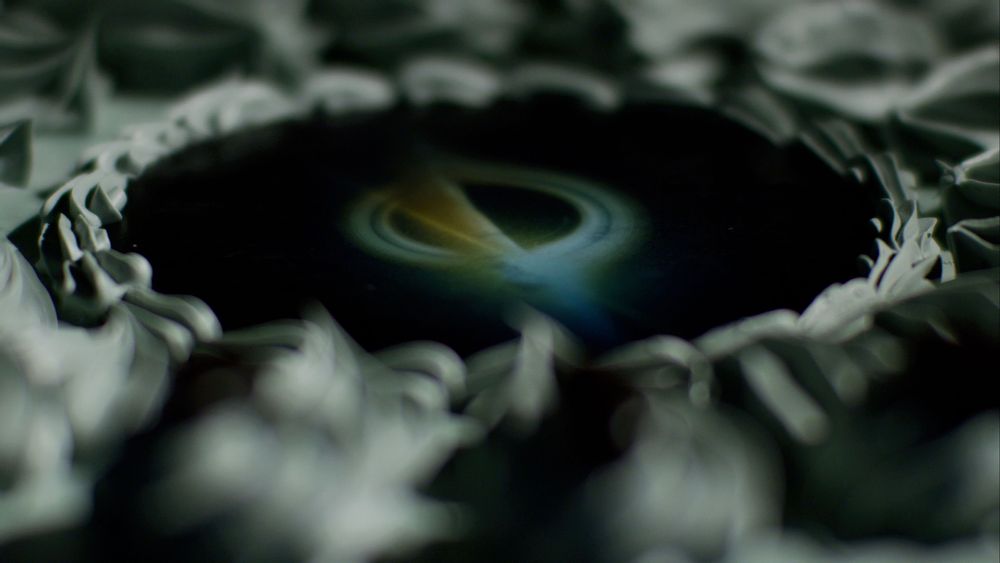
In Black Hole Descending the boundaries between life and death blur as an obscure ritual unfolds. Invoking tropes of science fiction film canon, the work contemplates end-of-life moments, convoluting the roles of witness, participant and spectator. The solemn tone is unsettled by the arrival of a near-death vision that hints at desire and its inescapable physicality, while underscoring the unpredictability of memory and experience. As the arising vision inevitably figures moments of existential contemplation, the moment of death is reframed as an unforeseen presence of queer imaginings.
FAREWELL RECORDING FOR AN OBSERVER OF AN UNKNOWN TIME AND PLACE
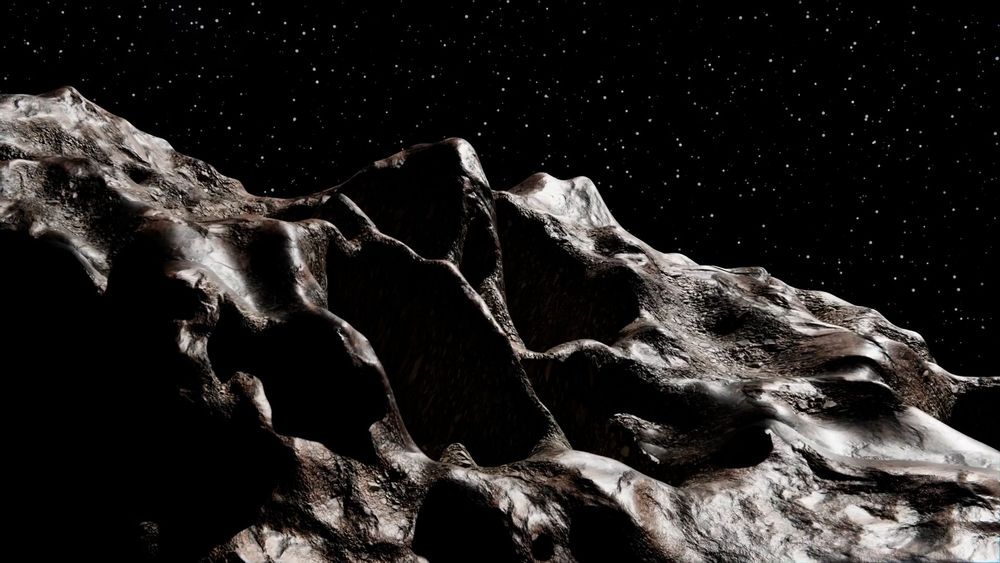
Part speculative history of the future, part worldbuilding rendering, Farewell recording for an observer of an unknown time and place is an essayistic digression on capitalism, environment, technology and death.
At the center of the work is Invasive Landscape Phenomenon, a mysterious, fast spreading malady that manifests as unbidden mental visions of indistinct landscapes. Reminiscent of dissociative trauma response, this fabricated affliction emerges in a world in which direct experience has been supplanted by mediated replacements.
Notions of loss, trauma and placelessness intertwine with environmental degradation narratives. Science fiction becomes both vehicle and methodology to express and investigate hypothetical temporalities; a ground in which time wraps upon itself.
Farewell Recording for an observer of an unknown time and place is a dense, many-layered piece, steered by the thoughts of a moving-image sequence editor and their first-person account of their way out of life itself.
WEEKS OF SAND, MONTHS OF ASH, YEARS OF DUST
I look at you and I see your gaze devouring the world, but I have no idea what world is being devoured.
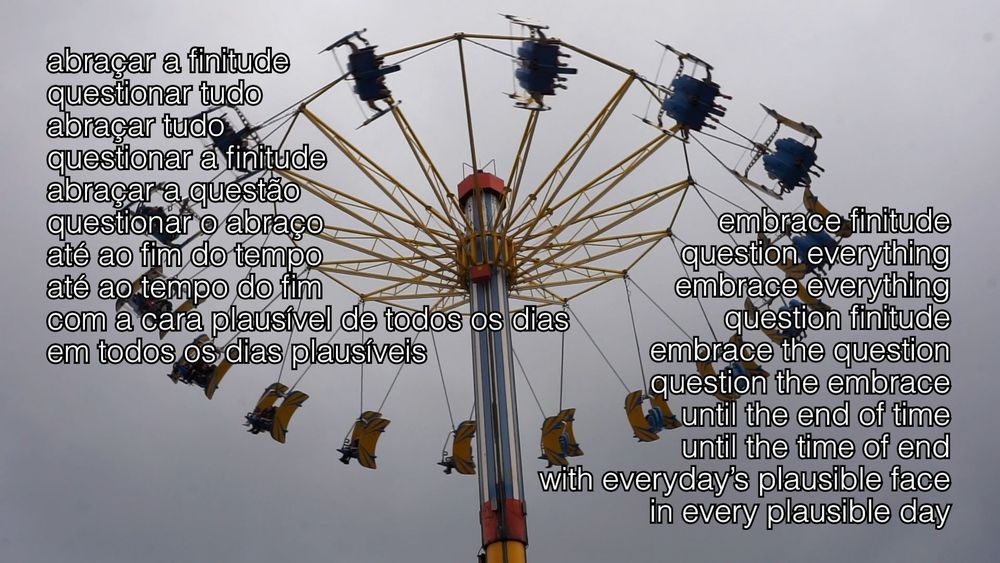
Weeks of Sand, Months of Ash, Years of Dust is a personal yet distant essay film on the instability of memory and the complexity of looking back. Weaving together the filmmaker’s childhood in the territory of Macao, the legacy of Portuguese imperialism, and the slow disappearance of her mother to dementia, the film interrogates how landscapes and bodies become sites of buried histories.
A work about the unarchiving of invisible narratives, Weeks of Sand, Months of Ash, Years of Dust asks how one remembers when memory itself is no longer shared, and how one re-reads the past from within a present that is fragmenting in real time.
Resisting narrative resolution, the film instead lingers in uncertainty, allowing gaps, repetitions, and silences to hold space for what cannot be retrieved. How does one gaze back?