Yannic Heintzen
In search of the revolutionary device
– practice as a design-archaeological research tool for collective transformative processes.
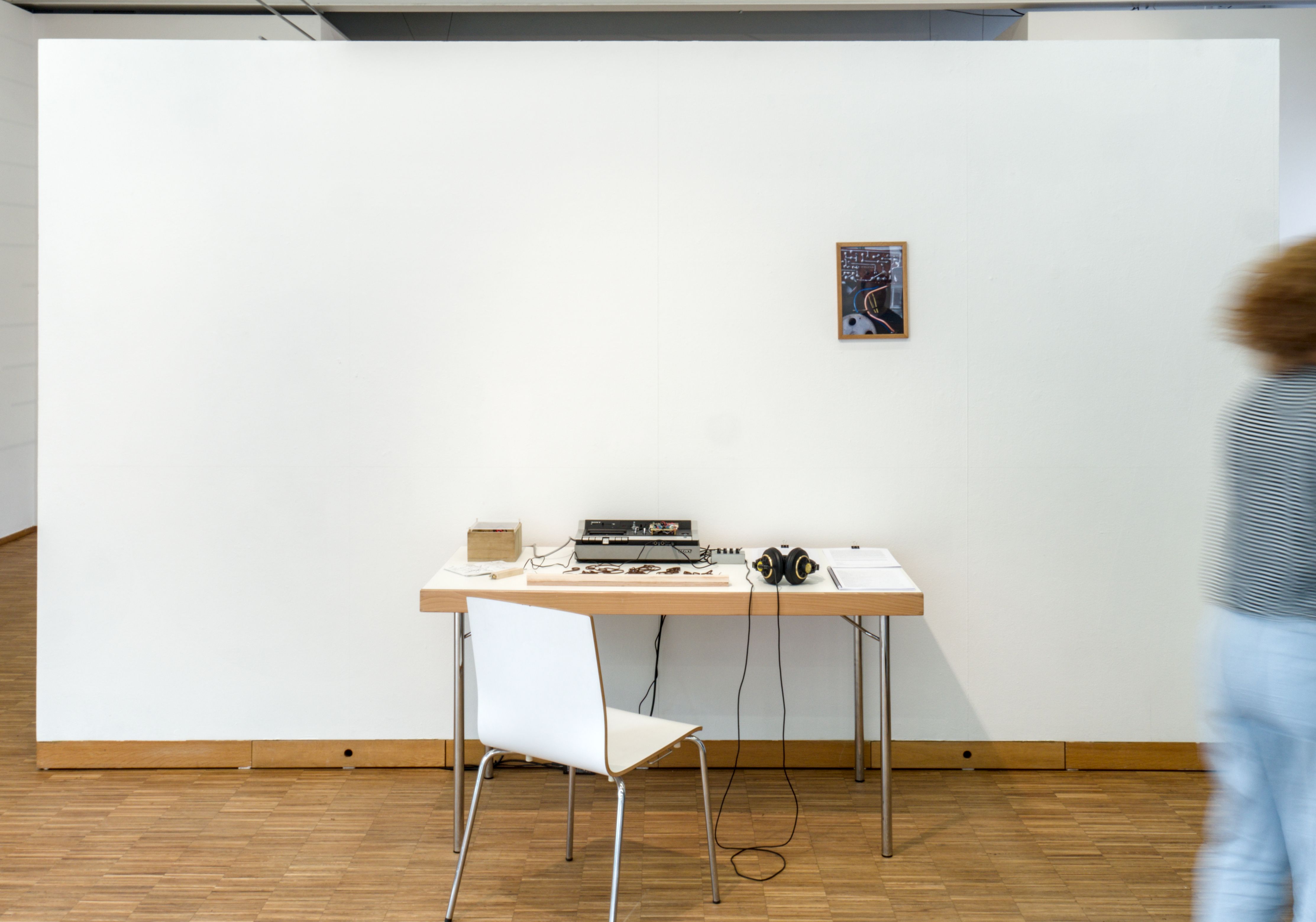
How can we become revolutionary? This doctoral project examines the concept of revolution—not as a historical event or political program, but as an old device. The concept is overloaded and cumbersome: grand and, at the same time—in advertising language, for example—so commonplace as to be banal—and yet people reach for it as soon as the desire for political change becomes urgent. The research treats this unwieldiness as material: like an old device, the concept can be taken apart; its parts can be examined, rewired, and salvaged. The hypothesis extends beyond the concept itself—the conditions to which it refers—discourses, institutions, and power structures—are also constructed, and what has been assembled can be reassembled.
The research project develops Basteln as an artistic research method—a German term that can only be partially translated as tinkering or bricolage. It builds on making practices and is etymologically rooted in craftsmanship outside the guild system. Machines are configured from collected fragments. Texts as well as materials and media. Electromechanical objects, sound and image installations that set in motion the relationships between concepts, discourses, and materials. Drawing on Rheinberger’s concept of the experimental system, these machines function as research instruments, not as illustrations of theory: they do not ask whether something works, but how. This methodological framework—machine archaeology—unearths the modes of operation inscribed in technical and conceptual artifacts and reconfigures them in practice.
A first machine, Elution (2026), plays back collected definitions of revolution via a tape recorder—in a disordered manner, eroding further with each playback; attempts to search through the tape by hand render the fragments nearly inaudible. The research interprets this failure as a finding about its subject: the concept eludes us the moment we try to grasp it directly.
The research project understands revolution less as a rupture than as the circular motion suggested by the word’s etymology. It asks whether becoming a revolutionary can be conceived as a process of becoming conscious: as perceiving the conditions under which we live as constructed—and thus as changeable. Whether the tinkering in workshops, installations, and interresponsive performances can be expanded into a collective practice is one of the open questions of this research. Expected outcomes include an ensemble of machines and a written dissertation that combines theoretical reflection, essays, and notations.
Supervisor HfK:
Prof. Dr. Andrea Sick
Supervisor Leiden University:
Prof. Dr. Anke Haarmann