Ayşe Ateş
Haunted by What Is Not There. There Because It Haunts:
On Storytelling, Historical Memory, and Archival Absence in Artistic Practice
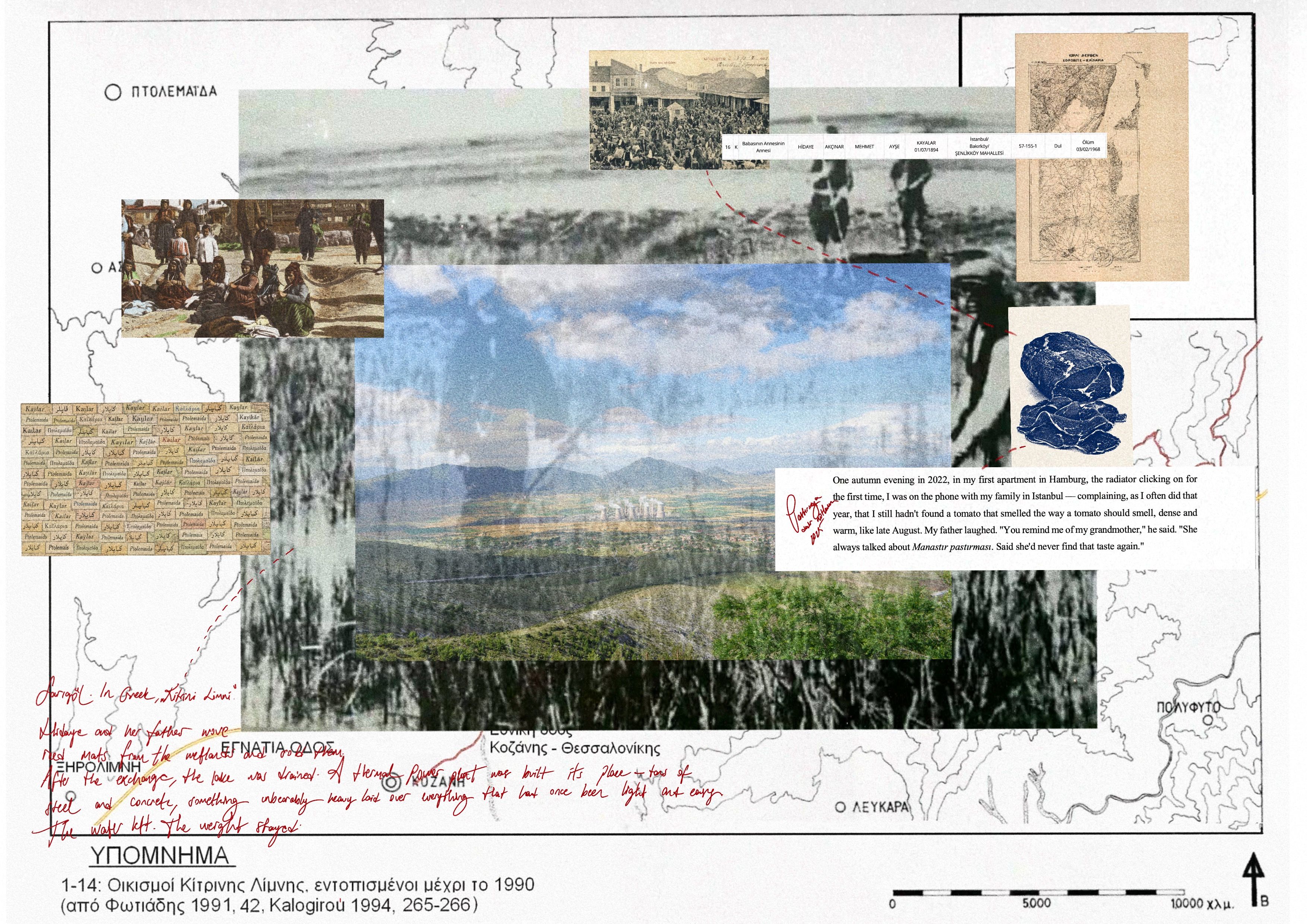
How does historical memory persist when the archive is absent — and what forms of inquiry remain possible in that condition? This research departs from an oral narrative transmitted within the artist's family concerning the 1923 Greek-Turkish population exchange: a food that could no longer be accessed after forced displacement, monastery pastrami. This seemingly minor detail became the entry point through which larger questions of loss, cultural rupture, and intergenerational memory transmission emerged. No photographs of Hidaye exist, no institutional records document her life beyond the bare fact of displacement. What persists is the story itself, moving across generations through fragments, gestures, and sensory recollection.
Archival absence is understood here not as a gap to be filled but as an epistemological and ethical condition that shapes both what can be known and how the inquiry proceeds. The research attends to what persists in place of the archive: oral narratives, embodied habits, and sensory traces that exceed the reach of official records. Haunting — following Gordon's account — names the process by which what has been rendered invisible continues to act on the present, making itself felt through oblique and indirect routes. Storytelling functions as a methodological orientation: a mode of tracing, listening, and attending to how memory moves through materials and people without fixing it into a coherent account.
Kailar / قايلار / Kailaria / Καϊλάρια is the central case study of this research, a project unfolding across Turkey, Greece, and North Macedonia through fieldwork, oral transmission, and collaborative encounters. It traces how memory of displacement circulates through community memory, family oral history, and everyday sensory practices — following the migration route shaped by the exchange without seeking to verify historical facts or assemble a coherent narrative.
The research contributes to practice-based artistic research by proposing a framework in which absence operates as a formal and epistemological condition. By foregrounding storytelling as inquiry and collaboration as an ethical practice, it develops an approach to historical memory that values process, fragmentation, and relational forms of knowledge — transferable to other artistic engagements with displaced communities and absent archives.
Supervisors HfK:
Prof. Dr. Annette Geiger
Supervisors University of Groningen:
Prof. Dr. Alice Lagaay
Co-supervisors University of Groningen:
Dr. Carine Zaayman